Dear friends and fellow sojourners,
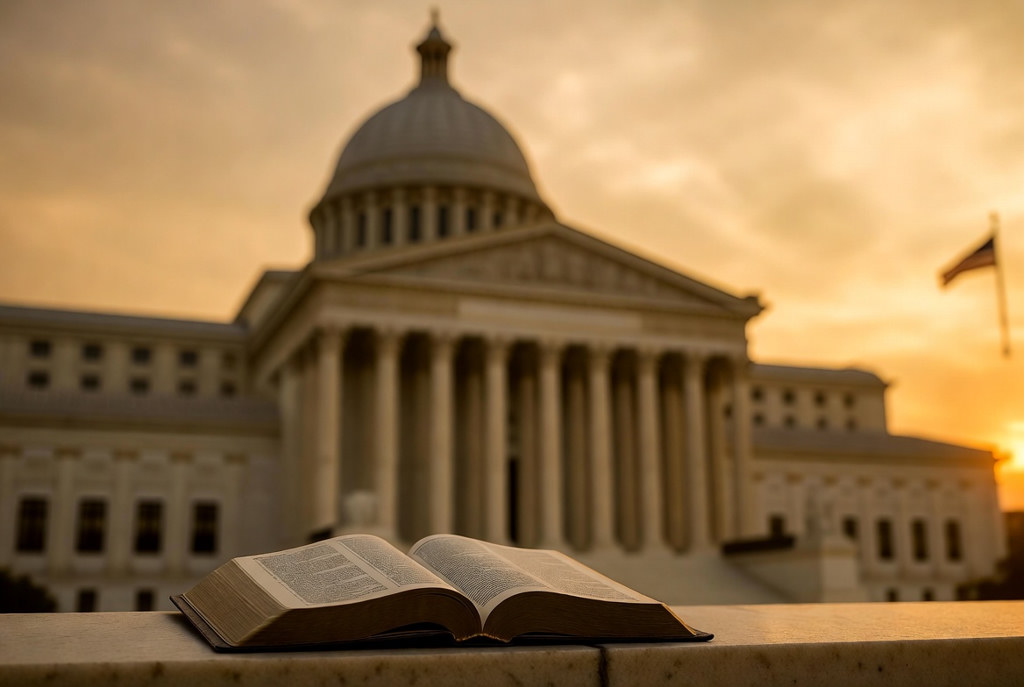
The Supreme Court has completed another term. In recent days the justices handed down rulings on executive authority over independent agencies, the counting of certain mail ballots, the preservation of women’s sports based on biological sex, and a firm reaffirmation of the longstanding constitutional understanding of birthright citizenship. Some of these decisions will feel like steps toward ordered liberty and common-sense recognition of created reality. Others will remind us, once again, how contested and limited even the highest human court can be.
As a chaplain who serves both behind prison walls through Kairos and in workplaces across North Texas, I want to speak from a different courtroom — the one that truly matters.
Government Was Never the Answer
Civil government is a gift. The Apostle Paul tells us plainly in Romans 13:1, “Let everyone be subject to the governing authorities, for there is no authority except that which God has established. The authorities that exist have been established by God.” God uses it to restrain evil, maintain a measure of justice, and allow human society to function. We should be grateful for every echo of that common grace.
But government was never meant to save us.
The psalmist gives the warning we so easily forget:
“Do not put your trust in princes,
in human beings, who cannot save.
When their spirit departs, they return to the ground;
on that very day their plans come to nothing.
Blessed are those whose help is the God of Jacob,
whose hope is in the Lord their God.” — Psalm 146:3–5 (NIV)
Whether nine justices expand or restrain power, whether they affirm or limit policy, these rulings cannot forgive sin, transform a heart, or bring the dead to life. They are important for the health of our republic. They are not our hope.
Our Founding Fathers understood this better than many of us do today. They did not treat the Constitution as holy scripture. They built a system of checks and balances precisely because they believed what the Bible teaches about the human heart. John Adams wrote in 1798:
“Our Constitution was made only for a moral and religious People. It is wholly inadequate to the government of any other.” — John Adams
George Washington repeatedly pointed the young nation to “the Providence of Almighty God” and called citizens to “acknowledge and adore the Invisible Hand which conducts the affairs of men.” They appealed to “the Laws of Nature and of Nature’s God.” They fasted, prayed, and gave thanks because they knew that without the fear of the Lord, no document and no court could long preserve liberty.
This Is Not Our Kingdom
Jesus drew the clearest line of all when He stood before Pilate:
“My kingdom is not of this world. If it were, my servants would fight to prevent my arrest…” — John 18:36 (NIV)
The Apostle Paul, writing to believers under a pagan empire, reminded them:
“But our citizenship is in heaven. And we eagerly await a Savior from there, the Lord Jesus Christ…” — Philippians 3:20 (NIV)
We are dual citizens, yes. We pray for those in authority (1 Timothy 2:1–2, NIV). We vote, we speak, we serve, we defend the vulnerable, and we honor the rule of law. But we never confuse the two kingdoms. The one we ultimately belong to cannot be shaken (Hebrews 12:28, NIV). It is not built by legislation, executive orders, or court opinions. It is the Kingdom of the King who will one day “rules the world in righteousness” (Psalm 9:8, NIV) and make all things new (Revelation 21:5, NIV).
A Chaplain’s Invitation
In the prison units and workplaces where I am invited to serve, I see something no court can ever deliver: lives changed by the Gospel. Men and young guys inside — and workers and leaders outside — discovering they are not defined by their worst day or their political victory or defeat, but by the finished work of Christ. That is the only message that truly sets captives free.
So what do we do in light of these latest decisions?
We pray. We engage faithfully but with open hands. We live as salt and light. We remember that “Righteousness exalts a nation, but sin condemns any people” (Proverbs 14:34, NIV). Most of all, we keep our eyes fixed on Jesus — the only One who can truly heal a nation or a heart.
The gavel has fallen for this term. But the final gavel belongs to the Judge of all the earth — and He does right (Genesis 18:25, NIV).
Friends, this world is not our home.
Heaven is.
And the King is coming.
Until that day, may we serve faithfully in the land of our sojourn, pointing everyone we meet to the only Name under heaven by which we must be saved (Acts 4:12, NIV).
From a chaplain’s heart — grace and peace to you.