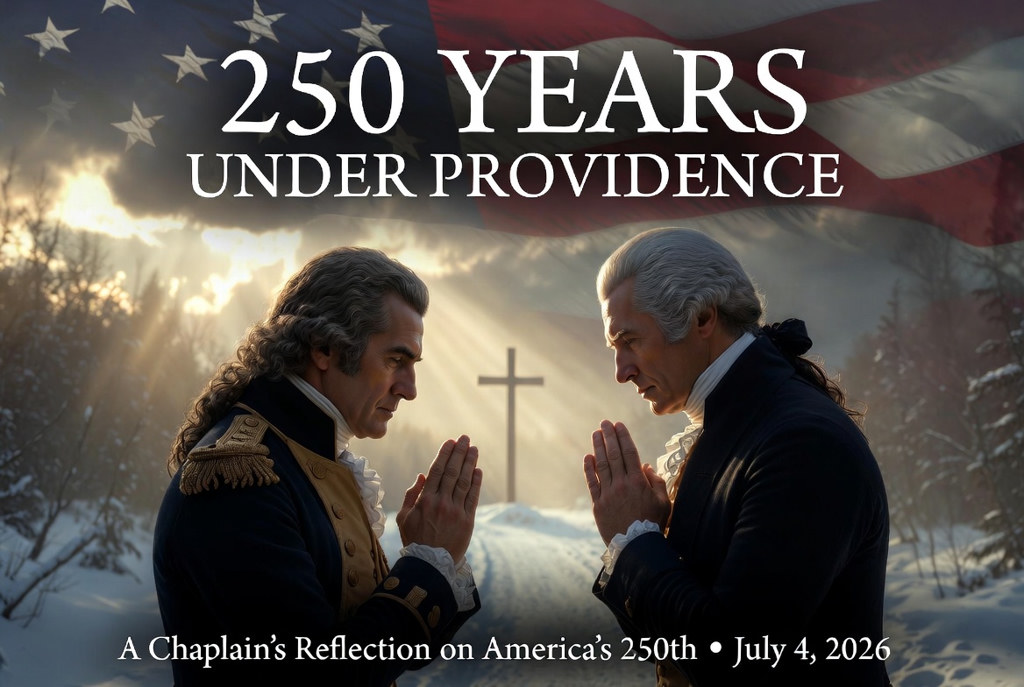

As fireworks light the sky this July 4th and our nation marks its 250th year of independence, I pause not only as an American grateful for the gift of freedom, but as a chaplain who has been called to walk with people in both uniform and everyday life. This semiquincentennial is more than a party — it is an invitation to remember who we are, whose we are, and why the experiment in liberty has endured.
Faith at the Founding
Our Founders were not perfect, but they were profoundly shaped by Christian faith and biblical principles. The Declaration of Independence does not appeal to abstract philosophy alone; it grounds human rights in “Nature’s God,” the “Creator,” and “divine Providence.” When the First Continental Congress gathered in 1774, its very first act was to open with prayer. The Reverend Jacob Duché stood and cried out to the “high and mighty King of kings,” asking God to look with mercy on these American states that had “fled to Thee from the rod of the oppressor.” John Adams later wrote to Abigail that the moment moved the entire assembly to tears.
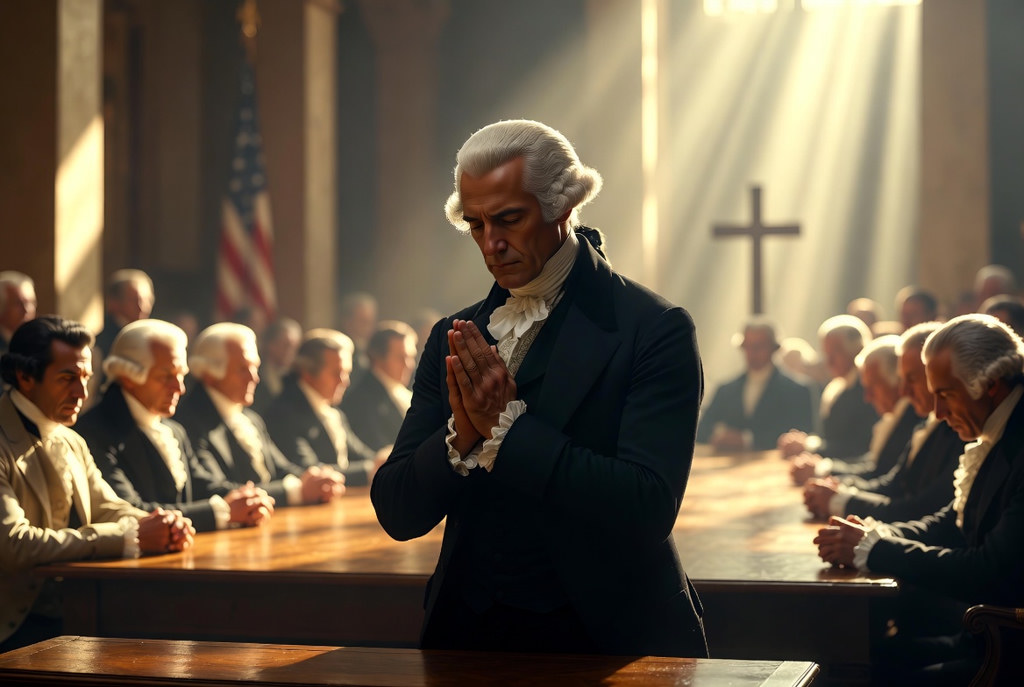
From pulpits across the colonies, preachers known as the “Black Robed Regiment” proclaimed that liberty was a sacred trust from the same God who had delivered His people before.
Chaplains in the Revolution
In the midst of that struggle for freedom, our leaders recognized that soldiers needed more than powder and shot. They needed someone who could speak to the soul when the cannons fell silent.
Picture Congress in Philadelphia that summer of 1775. The war was no longer an idea on paper. Men had already bled at Bunker Hill. Couriers brought grim reports. Delegates who had prayed for peace were now funding an army. And on July 29 — a date worth remembering — they did something that still tells you what kind of nation they believed they were building: they voted to place a chaplain with every regiment of the Continental Army, at the same pay as a captain. Not a volunteer afterthought. Not a morale hobby. An official line item in the ledger of liberty.
Think about what that meant in real life. Ministers left familiar pulpits and rode into muddy camps. Robert Treat Paine — a signer of the Declaration itself — also served as a military chaplain. Manasseh Cutler, a New England pastor, would eventually minister to multiple regiments, preaching when he could, burying the dead when he must, and reminding frightened men that their lives were not defined by a single battle. Timothy Dwight, who later became president of Yale, carried the same calling. These were not soft men handing out tracts. They walked into fever wards, stood over open graves, and prayed with boys who missed their mothers.
General George Washington, himself a man of deep faith, became chaplaincy’s strongest advocate. He understood that these ministers of the Gospel were essential “points of light” who would animate courage, encourage obedience, and remind weary men of the higher cause for which they fought.
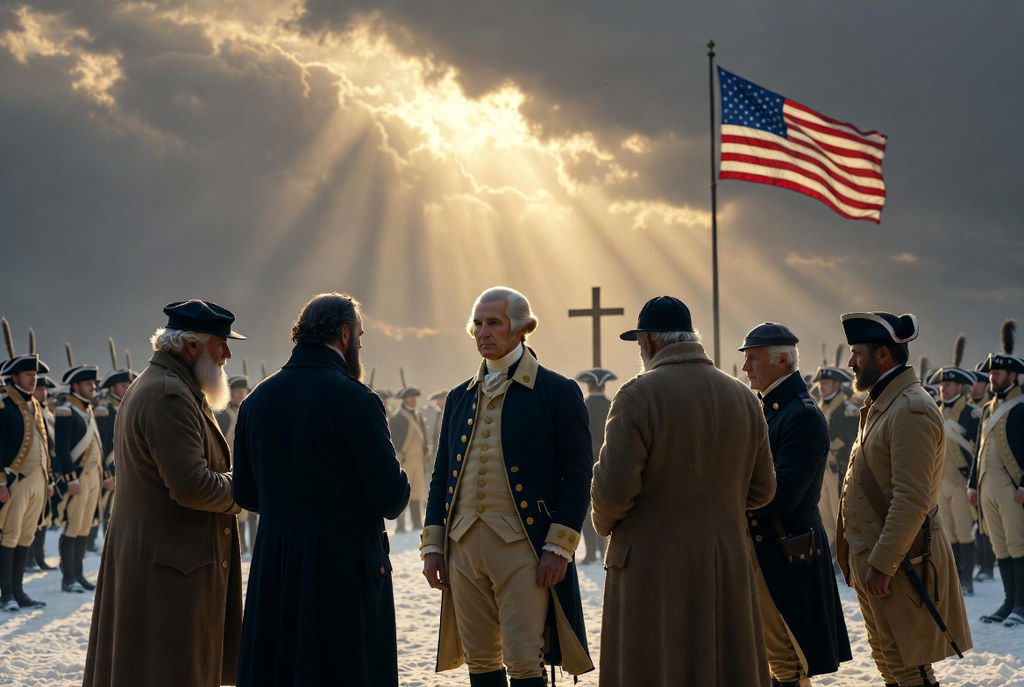
More than 200 chaplains served through the Revolution — preaching at Valley Forge, praying before battle, burying the dead, and holding out hope when victory seemed impossible.
That calling did not end when the last musket cooled. Chaplains followed Americans into every hard season since. In the Civil War, Hiram Rhodes Revels — who would later become the first African American to serve in the United States Senate — ministered in uniform long before he ever took a seat in Washington. And in the icy North Atlantic in 1943, aboard the troopship Dorchester, four chaplains — two Protestant ministers, a Catholic priest, and a Jewish rabbi — gave away their own life vests to soldiers they barely knew, linked arms, and went down praying as the ship sank. Different uniforms. Different faith traditions. One sacrifice. That is the thread that runs from July 29, 1775 to this very day.
That same conviction — that freedom’s defense requires care for the soul — has never left us. As America turns 250, the need for chaplains has only grown, and their ministry has expanded far beyond the battlefield, the hospital bed, or the hospice room.
Chaplains Today
Today chaplains serve as bridges between the church and the secular world in places most people never see. In the units where I am called to sit — with men and young guys society has often written off — we offer the hope of transformation and the dignity every image-bearer deserves. In workplaces and boardrooms, corporate and workplace chaplains provide confidential counsel for the executive facing ethical pressure, the employee crushed by burnout, or the team navigating grief after loss — reminding people that productivity and profit are not the sum of a life. Among first responders and disaster teams, we bring spiritual first aid when trauma strikes and words fail. In community centers, schools, and even legislative chambers, chaplains remind leaders and citizens alike that rights ultimately come from the Creator and that true justice flows from righteousness.
From a chaplain’s heart, I think of a retired Air Force master sergeant I sat with at a workplace gathering in North Texas last July Fourth. The grill was going, kids were chasing sparklers, and he had stepped off by himself near the parking lot, cap pulled low. I didn’t have an agenda — I just asked how he was holding up. For a long minute he didn’t answer. Then he said, “I love this country, Chaplain. I just don’t know how to turn the war off inside my head when the fireworks start.” We talked for twenty minutes. No speeches. No fixing. I listened, and when he asked, we prayed — quietly, right there by his truck. Before he walked back inside, he said, “Nobody’s asked me that in years.” The uniform comes off. The cost doesn’t. That’s why this work still matters.
Carrying Light Into the Gap
In an age when fewer Americans regularly attend church yet still hunger for meaning, purpose, and moral clarity, chaplains step into the gap.
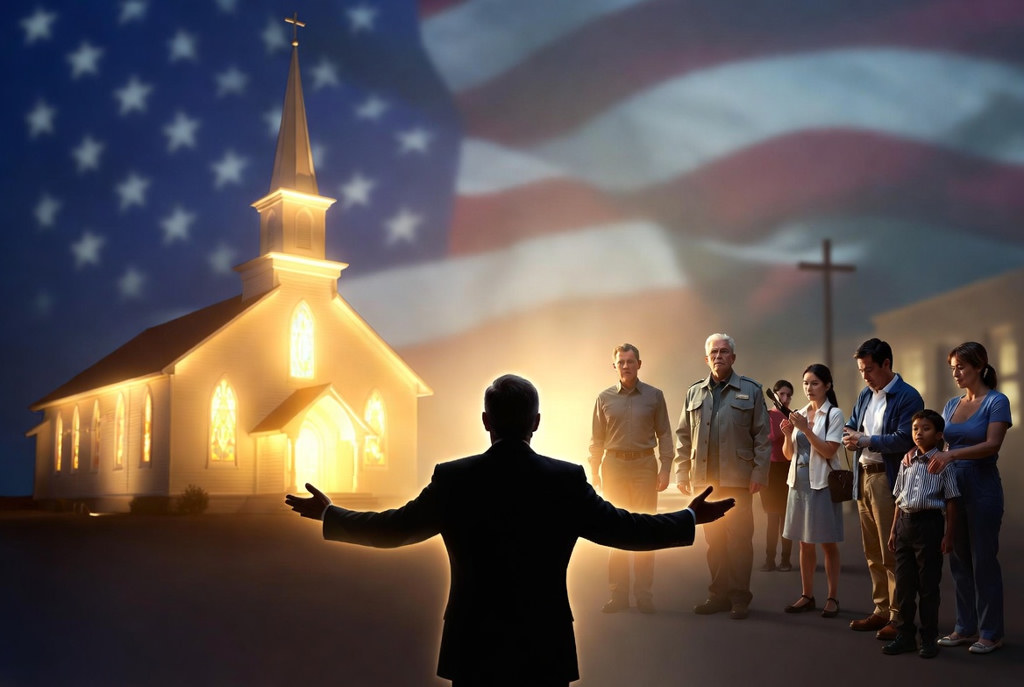
We do not coerce belief or demand conversion at every turn. We offer presence. We listen without judgment. We pray when invited. We speak truth in love. We care for the whole person — body, mind, and spirit — because every soul is more than a set of symptoms or statistics. We walk with people through the hard tension between personal faith and public life. We carry the light of Christ into marketplaces, cell blocks, crisis centers, and conference rooms where the church’s voice might otherwise be absent.
A Question for Our Time
Twenty years after the Revolution, when the cannons had long gone quiet, Timothy Dwight — the same man who had served as a chaplain in the war and would later lead Yale — stood before veterans gathered in Connecticut and preached a sermon he titled The True Means of Establishing Public Happiness. It was July 7, 1795. He opened with a sober truth: winning independence is one challenge; keeping a republic is another.
Excerpts from Dwight’s Sermon, July 7, 1795
“A free government has been found sufficiently easy; but to render it durable has been ever considered as a problem of very difficult solution.” — Rev. Timothy Dwight, July 7, 1795
Dwight warned that arms and wealth, by themselves, cannot secure a nation’s happiness:
“Most nations, and most politicians, have considered Arms and Wealth, as primary means of continuing national happiness.” — Rev. Timothy Dwight, July 7, 1795
His text from Isaiah was the heart of the sermon:
“Wisdom and knowledge shall be the stability of thy times.” — Isaiah 33:6, as preached by Dwight, 1795
By wisdom he did not mean diplomas or political cleverness. He meant virtue — piety toward God, goodwill toward mankind, and self-government over appetite and pride. Hear his own words on what truly establishes public happiness:
“The primary mean of originating and establishing happiness, in free communities, is, I imagine, the formation of a good personal character in their citizens.” — Rev. Timothy Dwight, July 7, 1795
“Good-will to Mankind, accomplishes directly most of those desirable objects, at which the political Constitutions, and the Laws, of Society aim; It makes men honest, just, faithful, submissive to government, and friendly to each other, without restrictions, or punishments.” — Rev. Timothy Dwight, July 7, 1795
A free people, Dwight argued, are not held together by fear alone. They are held together by character. When citizens learn to govern themselves, government needs fewer chains; when they forget God, even the best constitution begins to crack. That is why chaplains still matter — we are called to help form souls, not merely manage crises.
George Washington warned in his Farewell Address that “religion and morality are indispensable supports” of political prosperity. “In vain would that man claim the tribute of patriotism,” he wrote, “who should labor to subvert these great pillars of human happiness.” As we celebrate 250 years, the question still hangs in the air: Can ordered liberty long endure if we neglect the faith and virtue that gave it birth?
This Independence Day, let the fireworks be more than noise. Let them be a reminder of the God who has watched over this nation through war and revival, division and reconciliation, blessing and chastening. Let us give thanks for 250 years of providence. Let us repent where we have fallen short — as individuals and as a people — and renew our commitment to the self-evident truths that all are created equal and endowed by their Creator with inalienable rights.
And to every chaplain serving quietly in uniform or out, in sanctuary or in the secular wilderness: Keep showing up. Keep bridging. The harvest is still plentiful, and the fields — whether prison yards, factory floors, or neighborhood streets — are ripe for harvest.
May the same God who guided our Founders continue to guide us. And may we, by His grace, prove worthy of the inheritance we have received.
“Blessed is the nation whose God is the Lord.” — Psalm 33:12 (NIV)
A Prayer for America’s 250th Year
Almighty God, Sovereign Lord and King of nations, we come before You on this day of remembrance and celebration with grateful yet humble hearts. For two hundred and fifty years You have watched over this land. You have preserved us through war and peace, through times of revival and times of rebellion. You have blessed us with liberty, with prosperity, and with the sacred inheritance of ordered freedom under law. For these gifts we give You thanks.
Yet we also come before You in repentance. We have not always walked worthy of the light You gave our Founders. We have often forgotten that the rights we celebrate were endowed by our Creator, not granted by government. We have grown proud in our strength, divided in our loyalties, and careless with the moral and spiritual foundations that once sustained us. We have tolerated injustice, excused sin, and at times called evil good and good evil. We have looked to our own wisdom rather than to Yours, and we have reaped the bitter fruit of that independence.
Forgive us, O Lord.
Today we rededicate this nation to You. We acknowledge again that righteousness exalts a nation, but sin condemns any people. We ask You to heal our divisions, to give wisdom to our leaders, and to raise up a generation that fears You more than it fears man. Revive Your Church in this land, that we might once again be salt and light. Protect the unborn, strengthen families, and restore a love for truth in our schools, our courts, and our public square.
As we celebrate two hundred and fifty years of independence, may we never forget our complete dependence upon You. May this great experiment in liberty long endure — not because of our goodness, but because of Your mercy. May America once again become a nation whose God is the Lord.
We pray these things in the strong name of Jesus Christ, our Lord and Savior.
Amen.
A Prayer from the Psalms
Having prayed in our own words, we join our voices with the psalmist’s ancient plea for a land forgiven, revived, and restored to righteousness:
Restore us again, God our Savior,
and put away your displeasure toward us.
Will you not revive us again,
that your people may rejoice in you?
Show us your unfailing love, Lord,
and grant us your salvation.
Surely his salvation is near those who fear him,
that his glory may dwell in our land.
Love and faithfulness meet together;
righteousness and peace kiss each other.
Faithfulness springs forth from the earth,
and righteousness looks down from heaven.
The Lord will indeed give what is good,
and our land will yield its harvest.
Righteousness goes before him
and prepares the way for his steps. — Psalm 85:4–7, 9–13 (NIV)
From a chaplain’s heart to yours — thank you for remembering whose we are.