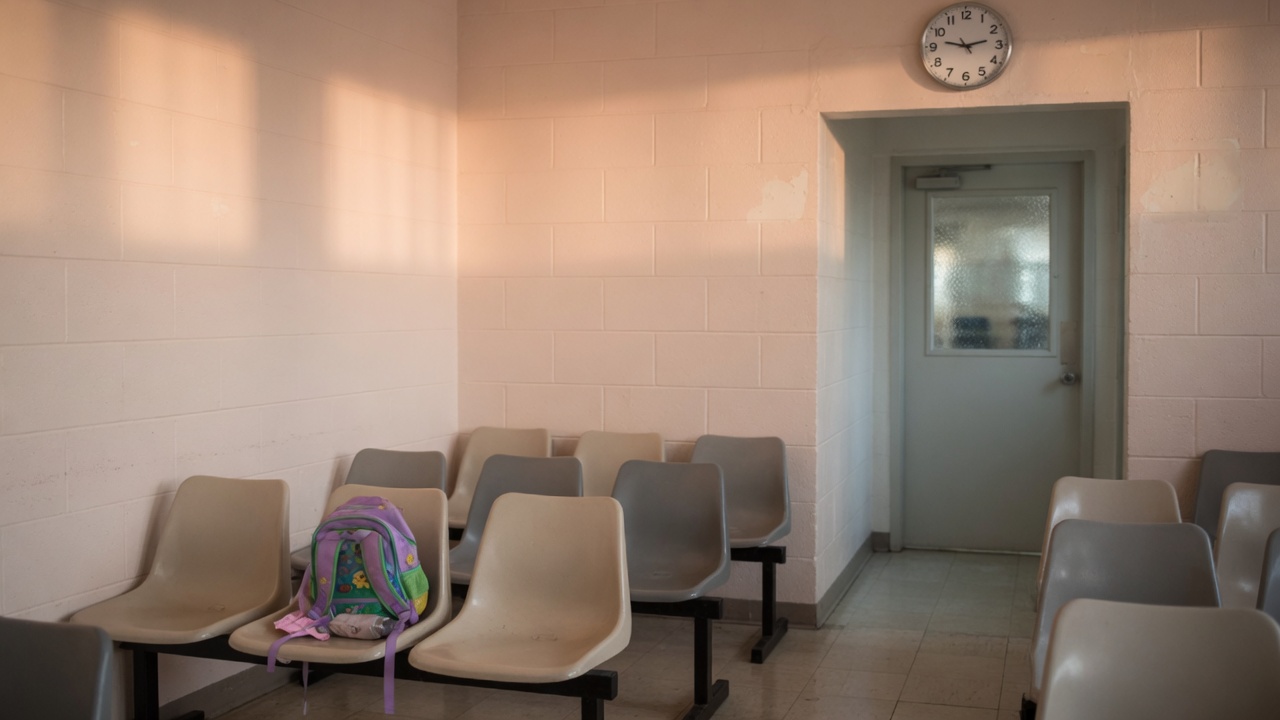

You know the room before you sit down.
The plastic chairs. The clock that seems to move slower than any clock at home. The backpack on the seat beside you. The quiet that is not peace so much as held breath. You dressed with care. You told the children what they can and cannot bring. You practiced what you will say in the few minutes you may get — and what you will not say, so the visit is not spent on regret.
If that is you today, hear this from a chaplain who walks with families of the incarcerated across North Texas: you are not invisible in that lobby. Heaven is not waiting for a cleaner story. God sees the love that still shows up when the world has already passed judgment.
The Waiting Is Part of the Cost
Visitation day is more than the hug or the conversation through glass. It is the drive. The paperwork. The rules that change without warning. The child who asks questions you do not fully know how to answer. The silence on the ride home when everyone is weary of being brave.
None of that is small. Scripture never treats waiting as wasted time. The psalmist writes, “I wait for the Lord, my soul waits, and in His word I hope” (Psalm 130:5, NIV). Waiting for the Lord is not passive emptiness. It is trust under pressure. Your waiting is not proof that love has failed. Often it is proof that love is still alive.
I have sat with spouses, parents, grandparents, and grown children who feel they are living two lives at once — the public one that has to keep functioning, and the private one that aches for someone behind locked doors. You do not have to pretend those two lives do not both belong to you. God is present in both.
What the Visit Is — and What It Is Not
A visit will not fix everything. It may not erase the shame others have piled on. It may not answer every question the children ask in the car. It may leave you more tender than when you arrived.
That does not make the visit meaningless.
Presence still matters. A face still matters. A voice that says, “I am still here,” still matters. The ministry of presence is not only something chaplains do inside units. Families practice it every time they choose to show up, even when the room is hard and the clock is loud.
Jesus never despised small faithfulness. He noticed people others overlooked. He welcomed children. He sat with the shamed. If your love looks quiet and ordinary from the outside — a packed bag, an early alarm, a calm word to a nervous child — that love is still holy work.
A Word for the Children in the Room
Children carry this differently. Some grow quiet. Some act out. Some become little caregivers long before they should have to. They may feel loyalty and anger in the same hour. They may not have language for any of it.
You do not need perfect answers. You need honesty sized to their age, safety for their questions, and permission to feel more than one thing at once. If you need help finding words, I have free age-specific guides for families walking through a parent’s incarceration — practical language for hard conversations, without minimizing the grief.
Start with the general family handout, When a Parent Goes to Prison, and share the age-matched versions with grandparents, teachers, or friends who help hold the children too.
What I Want You to Hear Before Your Name Is Called
- Your grief is not disloyal. You can love someone and still name the harm. You can hope for restoration and still tell the truth about what was broken.
- Your presence is not wasted. Even a short visit can become a tether of dignity in a hard place.
- You are allowed to be tired. Showing up does not require a cheerful performance. Faithfulness is often quiet and exhausted.
- You do not have to carry this alone. The body of Christ is meant for burdens like this — prayer, rides, meals, and listening without interrogation.
- God is not ashamed to meet you here. Not only in the polished sanctuary. In the lobby. In the parking lot. In the car when no one has words left.
“The Lord is close to the brokenhearted and saves those who are crushed in spirit.” — Psalm 34:18 (NIV)
Near does not mean He erases the wait. Near means you are not abandoned in it.
After the Visit
When the visit ends, another grief can rise — the goodbye, the rules, the distance that snaps back into place. Give yourself a little room on the way home. Pray if you can. Be gentle with the children if they fall apart in the car. Do not measure the day only by how “successful” the conversation felt. Measure it by love that refused to disappear.
If today is not a visitation day but a day you are still waiting for one — delayed paperwork, a lockdown, a denied list, a sentence that stretches longer than your heart knows how to hold — the same nearness applies. Waiting on a visit is still waiting with God, even when the calendar will not bend.
A Prayer for Visitation Day
Father of mercies, You see every family in every lobby. You know the names called and the names still waiting. Steady the hands that hold children’s backpacks. Soften hard rooms with Your presence. Guard conversations with truth and tenderness. Protect the dignity of those inside and those who love them. Give wisdom for hard questions, rest for weary hearts, and hope that is not naive — hope anchored in Christ, who came for the captive and the brokenhearted. Be near. Amen.
If you need someone to pray with you, talk through the ache, or help your family find language for this season, reach out. That is part of why this ministry exists — not to replace your church or your counselor, but to sit with you in the places the rest of the world rushes past.
From a chaplain’s heart — may love keep showing up, and may you know you are seen.